Tuesday, February 21, 2006


Giving Yourself Away…

So, for this class I have been watching a lot of movies that, according to the prof, illustrate a “postmodern milieu,” whatever that means. So between Blade Runner, What Dreams may Come and The Matrix a theme seems to have arisen that is being played out in this type of movie…giving yourself away.

Then I started skimming through my favorite author of late, Dean Koontz, and started seeing a similar theme. That it is through the primary characters self-giving and sometimes self-sacrifice, that the ultimate good is accomplished. That life is not fully lived if only lived for self. There is more out there than can be seen or even imagined and it is only revealed when you are willing, even desiring, to live beyond the now and live into the future.

What is it that is worth living, or even dying, for? Will we give ourselves away so that others can fully live? So that we can fully live?

Self-sacrifice is the cost of real relationship. Now by self-sacrifice I do not mean it in some self-demeaning, accepting abuse way. I mean that the willingness to live beyond the me and embrace both micro-community of accountable relationships and macro-community of larger relationships. We live interwoven into each other’s lives, realizing that we are changed and molded by every relationship and that in those relationships we are given the opportunity to live Christ.

Isn’t this the way Christ teaches us to live? The life with the shadow of the cross ever before us. Jesus illustrated that to live fully is to embrace the cost of life. I pray that I can live the kind of life that is lived fully and that I live until I die! I can only do this if I remain:

Lost in Grace,

Marty

Gracious God, grant me the ability and desire to live and die in your presence and for a purpose far greater than my own. In the name of the One who died that we might live, I pray. Amen.

Friday, February 17, 2006

Live to Tell by Brad J. Kallenberg
Evangelism for a Post-Modern Age

These are the notes I took from Live to Tell. For the past few years I have worked with the North Carolina Conference in developing a program called The Academy of Christian Witness. This idea came about when I discovered, as part of the NC Conference Commission on Evangelism, how few pastors felt comfortable sharing their faith or teaching others how to share their faith. Kallenberg captures the heart of what I have been teaching for the past few years, simply that telling your story, then telling God's story then telling where your story was divinely interupted by God's story is the best way to share your faith. Thankfully, as I struggle in my story, I remain:

Lost in Grace,
Marty

Metaphysical Holism—groups behave like real entities that both constitue each member’s identity and have top-down influence on them.

Linguistic Holism—language is the means by which we think and act in the world and cannot be pried off the world of experience and analyzed in isolation because the conceptual language we speak determines the shape of the world we inhabit.

Epistemological Holism—set of beliefs or paradigm we have of our world that forms an interlocking set that we share with the rest of our community. It is very resilient and typically reisists change. When change comes it comes all at once (paradigm shift).

“Conversion involves a change in social identity. Second, in large measure, this new social identity is accomplished by the acquisition new language skills. Finally, conversion is constituted by a paradigm shift that results in bringing the world into focus in a whole new way.” (p. 46)

“Because conversion involves a change in social identity, evangelism must be a corporate practice, executed by a community that is the source of the new believer’s identity. Second, conversion involves the acquisition of a new conceptual language, evangelism must engage outsiders in conversations spoken in that language. Third, because conversion involves a paradigm shift, evangelism must seek to assist that shift by being dialogical in style and by, wherever possible, enlisting potential converts in telling the story.” (p. 64)

“Conversion is a timeful process of enculturation into community.”
There is a “persuasive power of participation in a form of community.”
The God factor enters in because of “the Spirit-ordained power of narrative.” (p.118)

Metaphors:

Evangelism is more like…
“sailing than proofreading.” (p. 123)
“questing than archery.” (p. 124)
“acting kindly than cobbling.” (p. 124)
“medicine than parallel parking.” (p. 125)

Thursday, February 16, 2006

Rethinking Thinking

So we were talking about epistemology today in a class I’m taking on emerging cultures.

Epistemology is about how you know what you know. How do you know what you know? Does it come from inside and is acknowledged outside or does it come from outside and then is affirmed inside? Is there really anything that you “know” that is true, objective knowledge or is it all filtered through the subjective filter of our life?

Wow, that was a mouthful. I’m not even sure it said anything? The next point that struck me today was about understanding. It was tied to epistemology. Why don’t we understand? Communication is about understanding and sometimes when we are communicating with people of different filters and cultures we just can’t understand eachother. That is because we bring to ever circumstance, thought or conversation an internal construct or paradigm that helps us make sense of what we are hearing in light of what we already “know” (see, its getting a confused again, isn’t it?).

Maybe because we think completely differently than we ever have before. Maybe we will need to think completely differently than we are thinking today. For instance, there are some things my brain just hasn’t mastered yet that my nineteen year old son understands instinctually, like HALO. HALO is this complicated battle game that requires you to navigate your persona through obstacles while defending yourself against attack. The controller requires that you move at least four fingers independently of the other to perform separate functions. I can’t hardly walk and chew gum, so this manner of thought and action seems way beyond my ability…it drives me crazy. My son, on the other hand, finds it hilarioius just to walk up to me and blow me away. I guess I have to relearn how to think.

David Bosch said it this way:

Worldviews are integrative and interpretive frameworks by which order and disorder are judged, they are standards by which reality is managed pursued, sets of hinges on which all our everyday thinking and doing turns.” Believing in the Future, p. 49

Our relationship with Jesus does that to our soul. It re-arranges how we think, believe and live. It calls us to a whole new life…transformation is scary business. Thankfully I remain:

Lost in Grace,

Marty

Monday, February 13, 2006


The Culture of Too Busy

Why are you so busy that you have to talk on your cell phone in the rest stop bathroom stall? During the holidays I’m traveling down the highway between Waynesville and Durham. It is a four hour drive that I make fairly often to pick up my daughter. I usually stop at the same rest stop which is about ½ way between the two places. As I walk into the restroom I hear this guy talking. I look around but don’t see anyone, then I realize, he is sitting in the rest stop bathroom stall talking business on his cell phone. A couple of questions came to mind..

One, why are you so busy you have to talk on your cell phone in the rest stop bathroom stall? I mean is there really any deal that can’t wait a few moments. Remember, back in the day, when you were on the cutting edge if you had an answering machine? When you weren’t home, you just weren’t home. They would call back later. Faith Popcorn, the wacky futurist, says that a lot of people are throwing out their electronic communication equipment, selling their suburban homes and moving to the country. She calls it “unplugging.” The day I heard this guy getting all torqued about something he could not control three-hundred miles away sitting in a public restroom, I almost threw out my cell phone…almost.

Two, does the guy on the other line have any idea where you are? Wouldn’t that gross you out? What if you knew that the guy you were talking business with was sitting in a public rest stop bathroom stall? Would that make you respect him more or less? It just seems kind of odd. In our culture it seems that image is everything. What you where, where you live, who you hang out with all define you. We all have skeletons in our closets. Things that would diminish others views of us. I would think this picture would definitely diminish his co-workers opinions of him, plus if you got that mental picture, wouldn’t it be hard to take him seriously ever again?

Lastly, what if he dropped the phone, would he retrieve it? I’m thinking as tied to that piece of equipment as he was, he would definitely dive in for it. This goes to priorities. What matters? It seems t me two things have a chunk of the market shares of our lives, business and busyness. They both will take all you have to give and require more. When I say business, I’m not just talking about vocation, though that is part of it, I’m talking about anything you give your life to. It could be school or work or a hobby, whatever becomes a time-idol for you. Busyness is the same way. Some of us may not concentrate on one thing but spread ourselves to thin that we are constantly in motion. If I have learned nothing else from therapy it is that busyness is usually a coping mechanism to keep us from reflecting and listening to the still small voice in us and outside of us.

So, if you catch me in the bathroom at a rest stop on the phone, remind me to unplug. Five minutes of silence won’t kill me (or you). Stop, shut up and be silent, then you may find that you will be, like me…

Lost in Grace,

Marty


The Sacramental Prophet…

Reflections on The Church in Emerging Culture edited by Leonard Sweet

My favorite line in The Matrix may well be when Morpheus tells Neo, "there is a difference between knowing the truth and living the truth." It is time the Church decided to live the Truth instead of just acknowledging it's existence.

With passion in heart and pen in hand I read Leonard Sweets collection of articles and responses from five of the Church’s postmodern prophets. In The Church in Emerging Culture Andy Crouch, Michael Horton, Fredrica Mathewes-Green, Brian McLaren and Erwin McManus write and discuss how the church effects the culture and it’s call to transform it and not hide from it. I found myself resonating with of the writers who seem to be at opposite ends of most of the discussion.

Andy Crouch is a Haurwasian leaning Methodist with strong Arminian sentiments and a focused understanding of the power of sacramental theology. His critique of the postmodern understanding of the culture does not seem to jive with my understandings of it, but his reflections on the importance and necessity for the sacraments to form and transform the world is right on. As Crouch states, when reflecting on the consumerist nature of our culture, “the Eucharist is the place where the church practices post consumerism.” (p. 83) He goes on to illustrate biblically and historically how the Church views the Eucharist as a place where real presence meets the real problems of our world. The answers, according to Crouch, can be found in embracing and practicing the sacraments in a much deeper way than the post-enlightment Church has done so in the past. “The sacraments answer the postmodern hunger for a true story after modernity’s impoverished recital of facts and figures.” (p. 85)

On the other end of the sacramental argument is futurist and social justice advocate, Erwin McManus. His church, Mosaic, attracts a rag tag, fugitive group of people who find meaning and transformation in the person and work of Jesus Christ. His critique of the Church is around its bowing to the culture instead of standing over and against the culture to implement change. He states, “To speak of culture we must move from talking about who we are to who we are becoming.” (p. 237) He goes on to argue against the church attempting to live apart from the community when he says, “Whenever the church assumes the role of an institution committed to protecting its constituency from the emerging culture, we reduce our impact to a drop in the bucket.” (p. 238)

Is it possible to bring these two together? What rings in my heart is what Wesley called the marriage of piety and social justice. Can we practice the real presence of Christ in the sacraments so that we can become the real presence of Christ in the world? Can we stand with one foot anchored in the ancient practices of the Church and speak the language of the emerging culture? That is the challenge for the church today. Perhaps this is, indeed, my challenge. My challenge may be to become a sacramental prophet. One who calls for action informed by the sacraments. One claiming the promise of baptism and desiring to live a life of dying to self. One molded and shaped by the frequent practice of the Eucharist and, thereby, called to feed those who hunger for food as well as righteousness. We, the Church, must be ancient and future without compromise. We must be transformed by our faith so that we can live transformation for a world hungry for mystery. Essentially, it seems to me, that the sacraments provide the mystery to a culture hungry to reach beyond it’s self and the practices of social justice provide the action that speaks louder than words. Thanks be to God that in this struggle I remain:

Lost in Grace,

Marty

Sunday, February 12, 2006


There Is No Spoon…

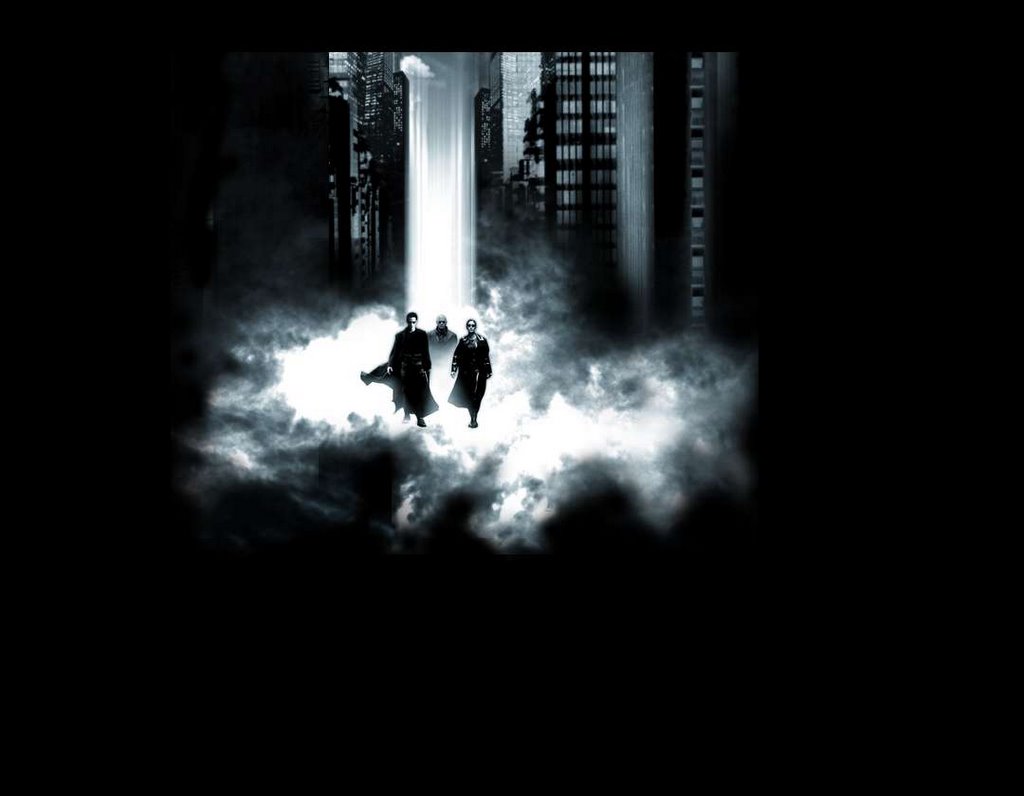
A young “buddah-ish” child sits in the middle of the floor staring at spoons and “bending” them with his mind as Neo walks in to see the Oracle. This scene comes in the middle of this version of a postmodern gospel, The Matrix. This turning point in the movie weaves together the movie’s two messages. Those messages, inextricably woven together, are that we are to question reality and embrace mystery. The Matrix requires the viewer to grapple with the known and seek out the unknown.

How do you bend the spoon? You can’t until you realize that “there is no spoon.” Reality is not really reality. All that you perceive is simply a construct of electric impulses to your brain. The world is a product of your perception, therefore changing your perception allows for the changing of your world. All of reality is, then, up for grabs. Once you become aware that your reality is not reality, you have the ability to control it. To control it, you must first question its very existence.

Isn’t that how we got in to this mess in the first place? We questioned. Neo begins with an unsettling feeling that the world is not complete. That something is askew. He begins questioning and seeking answers. The answers he finds only lead to more questions. His reality isn’t real and the real world is an abysmal place of struggle and pain. Question reality.

The second message is to embrace mystery. Rather than being the definer of his own destiny he must accept that destiny is discovered amidst the struggles of embracing mystery. Signs and symbols lead to actions. Metaphor and encrypted messages from a cookie-baking Oracle provide direction but not decision. Neo discovers that he is no longer living just for himself but is living beyond himself. To fully live his destiny he has to embrace what he cannot believe and live what cannot possibly be true. He has to believe and, perhaps more importantly, allow himself to be believed in. Embrace mystery.

How like the Christian walk? Reality is not formed by perception but by mystery. We have to question reality when viewed through the lens of the Eucharist. Our baptismal eyes, newly formed in light of our embracing of the mystery of Christ, allow us to realize that all that is, is simply perception and not Truth. That which is Truth is far deeper than our ability to perceive. When we begin our faith journey it is not simply the beginning of our life believing in God but beginning to realize that God believes in us. Our God-shaped destiny is out there but seems to be difficult to discern, much less, fulfill. It requires that we question reality and embrace mystery. This is the struggle that I continue as I remain:


Lost in Grace,

Marty

Thursday, February 09, 2006


Indigenous Faith...Believing Where You Are

All lasting faith is indigenous. It is birthed inside the language and culture of the tribe or group that embraces it. The names for God and the scriptures must be understandable by the people who God is laying claim upon. This explains while colonialist evangelism never made significant inroads into the two thirds world. There was the assumption that to be Christian was to be Western. It can be seen by the Christian expansion of the last decade into these areas of the world that it was not the message that was being rejected but the means of communicating the message.


In Whose Religion is Christianity, Senneh states, “The indigenous discovery of Christianity, by contrast, describes local people encountering the religion through mother tongue discernment and in the light of people’s own needs and experiences.” (Sanneh, 55) Reading Sanneh with the words from United Methodists bishops serving in the two-thirds world ringing in my ears, the symbiosis of their words was like spiritual stereo. While western Christianity barely holds on to its ever waning base, the two thirds world is exploding as the Word becomes flesh to them in their mother tongue. They are embracing God that can be named and claimed in their own language and embracamidstist the circumstances of their life. The Western church must return to a missional understanding of the faith, embracing an ever deepening understanding of the culture, in order to be able to proclaim the gospel effectively again.

What is the mother tongue of the Barnes and Noble, X-box and internet generation coming of age today. It is certainly not the language of the mid-to late nineteen hundreds. It is more attuned to the language of the first century. They are image driven and desire connections far deeper than their parents. They seek to replace broken families with whole relationships. They are spiritual but not religious, worshipful without an object of worship and seeking but not finding. During the next few days there will be multiple posts regarding the language of the post-modern culture as I journal on discoveries in literature, cultural observation and, of course, movies. How can we get them to understand that they are...

Lost in Grace,
Marty

Tuesday, January 31, 2006


You Ought to be in Pictures

The verbal church is dying. The church based solely upon the talking head in front of the room espousing profundities and relying upon printed text to convey truth is on life support and most people do not even know it is sick. I think I began this discover process a few years back and have seen it become more and more a reality in the past few years.

We are visual people. As a matter of fact, if you were cruising blogs you probably stopped because of the picture rather than the title of the entry. We are people who receive information through environment, metaphor and our multiple senses. I would venture a guess that most of us could not go more than a few days without receiving or conveying information in picture or metaphor. Movies understand that. They create the full environment. They are changing culture not reflecting it and are delving into much deeper spiritual issues than some churches. I’m not saying they are proclaiming the truth but they are testing the boundaries of acceptability about the truth. Movies are challenging us to think (now that’s a change) and to discuss what is reality and what is truth.

Now while some of you are aghast, others are realizing that this need to teach on multiple levels in not new. As a matter of fact, this is the way Jesus taught. He spoke of fish on the beach where the smell of fish would be hanging heavy in the air. He spoke to farmers of planting and reaping, taught while eating with sinners and even the Eucharist is a completely multi-sensory experience embodying sight, sound, taste and touch.

So, what do we in the church do to embrace this move? We have to return to using all the senses to share the Gospel. We must be intentional about creating an environment that teaches. Creating metaphors that teach, using visuals that illustrate and music that inspires are the first steps toward becoming multi-sensory. The other step we can make to teach with sight, sound, taste and touch is by sharing the Eucharist at every worship service. Not only does it make every worship service multi-sensory, it assures that Christ is mysteriously present (another value on the rise!) amidst the body of Christ gathered.

There will be controversy. Revolution always causes controversy. The change will happen, whether we embrace is or it is forced upon us, it is on the way. Will we learn and grow or continue to whither away? I remain:

Lost in Grace,

Marty Cauley

Gracious God who teaches us in many ways, help us not be limited by our own prejudices about methods but be willing to embrace the move of your Spirit. Help us to share the gospel like Paul by doing whatever it takes to help others discover You. In the name of Jesus, the Christ, we pray. Amen.

Sunday, January 29, 2006

It Looks Like Rain

Have you ever had a dry spell? A time when everything was hard? Relationships were hard, work was hard, and play was even hard? I usually think of myself as a relatively creative and positive person. Now don’t get me wrong, I have my “Downer Dude” days, but most days I can get up and keep going. Lately, however, I have been in a dry spell.

There are a lot of desert times in the Bible. Almost every prophet has those times of complete desperation. The people of God wandered around the desert for forty years, now that’s a dry spell (literally and proverbially). Even Jesus spent time in the desert and faced some of the biggest challenges of His life until he was crucified when He was tempted. I guess we shouldn’t be surprised by the dry spells.

Tonight, or rather early this morning, an amazing thing happened. For the first time in months I awoke with an idea that wouldn’t let me sleep any more. Now it wasn’t an idea that’s going to change the world. It was, essentially, a new way to share a message that just hasn’t been working during the teaching times at the winter events at Lake Junaluska. The key thing is that the idea woke me up…the passion to write it down would not let me sleep. I can’t remember the last time that has happened. During my more creative times it happens all the time. I usually keep a legal pad and a pen beside my bed so I can dump these midnight brainstorms onto it and get back to sleep. Now I’m up at 4 a.m. writing down these ideas and my mind is going 100 m.p.h.

It looks like rain. Now this little spiritual rainstorm may not be the end of my season in the desert, but it is enough for God to encourage me now to keep going. The desert times won’t last forever. Thank you God for the rain…let it pour! I remain, waiting for the storm…

Lost in Grace,

Marty

Gracious God, who does not abandon us in the desert, who sends the rain when the drought seems to be never ending, thank you for your grace. Help me to be willing to accept the dry spells and trust in your everlasting love. Let my soul yearn to be quenched by your Spirit. And help me to dance in the rain and give you the praise with it pours! In the name of God our Father, who holds fast in the desert, Jesus, the giver of Grace, and the Holy Spirit, who rains upon me, I pray. Amen

Wednesday, January 25, 2006


Cosmic Disconnect

“The dispute concerns an unbearable mismatch between lived reality and traditional explanations that proceed by their own logic without reference to lived reality.” Walter Brueggeman

I have a friend whose father is dying. That sounds harsh and I wish there was a gentler way to put it but that would reinforce the purpose of this meditation. Though, admittedly, it may be less meditation and more ranting and raving.

Don’t you wish Christians would occasionally live in the real world? The world of pain and suffering. Of struggle and discontent. That they would put away their pious platitudes and see that original sin is alive and well in the twenty-first century and that though we can seize our God-shaped destiny we are still guilty of only living a shadow life of what God has for us. There is still sickness and death. Still hurt and loss, and to be honest I don’t like it.

My friends laugh at me because I don’t like movies with sucky endings. You know the type. The one I use most often as an example is Message in a Bottle. The “hero,” some lovelorn man who lost his wife, throws messages in bottles out into the ocean. A woman finds them, follows them and they enter into a relationship. He (of course he because in romantic movies it is the man who always screws it up) pushes her away only to later realize he loves her. So he gets in this blasted sailboat he has been working on the whole move and sails off to find her…getting ready for a happily ever after ending? Yeah, so was I, then he hits a storm, tries to help somebody and dies. What? That ending sucks! Don’t we have enough of suckily ever after?

This is where the “unbearable mismatch” exists. Traditional explanations offer things like, “it must be his time” or “God must need him in heaven.” What a bunch of holier than thou bull-oney. Lived reality is that our world is separated from God and as such it is plagued with death and pain.

The lived reality is that my friend appreciates that, even though I’m a spiritual person, I don’t offer platitudes. Actually, I make her face some hard realities so that she will be better able to deal with things as they come. Certainly, I offer a shoulder to cry on, but I also offer faith balanced reality. I believe that God heals, but I also believe that people die. In the Old Testament, those three guys are about to get toasted in the furnace and they say the coolest thing to the king who orders their execution. To Marty-phrase it they say, “Our God can save us, but even if God chooses not to we won’t worship you.” That is powerful faith balanced reality. That is how I want to live.

We mess up when we think Jesus came to give us an easy, happily ever after life. People who believe that really didn’t actually read the Bible. Jesus said his yoke was easy, he didn’t say life would be easy. Jesus was crucified. Paul, who wrote the majority of the New Testament and planted churches all over the place, was shipwrecked, beaten, stoned, run out of town and eventually martyred. That does not sound like a positive career path. Are we saying he wasn’t Godly enough? Faith balance reality allows us to understand that our God is able to do exceedingly, abundantly amazing things but that that we live in a world separated from God where sin, pain and death are real. That sometimes God does not deliver us from pain but travels through the pain with us. God bears those burdens, shares the load and carries us through.

One last thought on pain. I used to think it would be cool not to feel pain. Actually I intellectualized my emotional life and was attempting to control all my feelings, but especially pain. What I’ve learned is that to understand real happiness, to experience bliss the pain is a small price to pay. Now, I don’t go looking for pain, but the other side of the coin is an amazing thing. I think that maybe that is what Jesus meant when He said he came to give live and to give it abundantly…real life. Life lived to its fullest.

I still don’t like pain. I still hate movies with sucky endings, but I know God can take the crap the world throws at us and redeem it. How do I know, because God redeemed me. That is yet another reason I’m glad I am:

Lost in Grace,

Marty Cauley

Gracious God, I grow tired of pain but I know you are with me in the midst of the struggle. Help me to be the kind of friend that tells the truth and offers a shoulder of hope and support. Help me carry the pain of others when their burdens are too much to bear and help me to release my own when I can carry them no longer. God, allow me to embrace the bliss of life and enjoy its blessings and not be bound by its pain. In the name of our pain-bearer, Jesus, I pray. Amen

Saturday, January 14, 2006


People Who Make You Better

One of the things I have been learning during the past year is to hang around people who make you better. People who challenge you. People who make you think and who think with you. People who, when you work together, synergy happens.

My friend Maria is an excellent example. I had been struggling with summer themes and helping young adults understand grace at a whole new level. Maria came and spent a few hours over a long lunch and an idea session with me and we worked out a lot of what to teach this summer at the LJ youth events and how to teach it. She took my ideas and compounded them, enhanced then and allowed the explode with potential. My other friends, Rob and Emilie, are working on creating a teaching atmosphere and set design that will bring the young people into the environment. My friend Danelle is helping me learn a whole new set of young adult teaching and coaching skills as well as providing a whole new set of group building games. All of these people understand my passion to help young people experience God at a whole new level and share some of that passion in their own area of expertise. They get it! What I provide them is an opportunity to create something completely new with a spiritual underpinning that could affect young people and their churches across the southeast and beyond. It is true that you are defined by those you hang around. The cool thing is all of these people are way ahead of me in a myriad of areas but the choose to hang out with me to see what God’s gonna do next.

Isn’t that why the disciples hung out with Jesus. They wanted to be defined by the ultimate rabbi. They knew of his teachings, they knew he would challenge them at a whole new level. I’m not sure they had any idea that he would push them to amazing levels such that the movement they started would eventually change the world, reconstruct reality and redefine faith.

Choose who you hang out with carefully. Choose people who challenge you and your ideas. Who push your reality and make you think. Change in you is usually caused by change in your concepts of reality and how you think about it. That change comes by hanging out with people who push you to see clearer and farther. I only hope that I push others and add value to them the way they do to me. Praise God for friends who love you enough to push…I remain:

Lost in Grace,

Marty

Gracious God, thank you for those who push me to live a better life for You. Let me be the friend that pushes them to pursue their God-shaped destiny with passion. In the name of the ultimate Rabbi and teacher, Jesus, I pray. Amen

Wednesday, December 28, 2005


Change Environment…Change Attitude

I am affected by my environment. Actually, we all are to some extent. During the past couple of weeks I have been in the process of moving from one home to another. The house we moved from is a quaint cottage but it is very dark inside. There is dark paneling and it doesn’t get a lot of sunshine. I rented it furnished so that I could see if I was going to make the adjustment from the local church to this position at the jurisdiction. I realize now that this was probably a mistake.

First of all the dark rooms and paneling were not really my style. I need light and sunshine. Secondly the house was cold because there was no central heat and the windows leaked very badly. Lastly, the stuff there was just not my stuff. I am pretty much a minimalist and this house was rather over-furnished for my taste. All of this contributed to it not ever really feeling like home.

In the past couple of weeks I have retrieved all of my stuff from storage, rag tag as it may be. Gotten a new favorite chair from my brother…all fluffy and reclines to make it the perfect nap chair and moved into a condo that gets excellent morning sun and that is painted off white throughout. Essentially it is warmer (thanks be to God for central heat!), sunnier and brighter. It makes me feel better just being here, especially since all the stuff is my stuff. The pictures on the walls are my pictures. The furniture, sparse as it is, is my furniture. Suddenly coming home is something I look forward to rather than something I avoid. It has become my place to seek solitude and silence and listen for God to speak to me again.

Sometimes to change your attitude you simply have to change your environment. Changing where you are changes how you see things. Jesus understood this better than anyone. So often when the world pressed in upon him and the burdens of ministry became wearisome he retreated into silence and solitude. He changed His environment so that He could better hear God. When was the last time you shut down your computer, turned off your IPOD and listened to God whisper? It is time to change environments. I remain:

Lost in Grace,

Marty Cauley

Gracious God help me to come away, change my environment and seek to hear Your voice again. Grant me silence to listen and solitude to dwell in Your presence amidst the trials, struggles and busyness of my life. In the name of the One who so often went away to spend time with you, Jesus, I pray. Amen.

Sunday, December 11, 2005

For my forty-first year I want to:

Live passionately
Love with abandon
Laugh loudly and often
Weep heartily to wash away life’s pain
Pursue significance over success

Lost in Grace,
Marty

REVOLUTION:

Worn out on church? Finding vibrant faith beyond the walls of the sanctuary.

George Barna

Here are some key points from a book IÂ’d recommend as a resource for those seeking to understand youngadulty! For more information on George Barna, his research, methods and services visit http://barna.org .

Lost in Grace,
Marty

Two Key components of Revolutionaries:

o They have no use for churches that play religious games.

o They pursue intimate relationships with God.

The Seven Passions of Revolutionaries (p. 22)

1. Intimate Worship

2. Faith-Based Conversations

3. Intentional Spiritual Growth

4. Servanthood

5. Resource Investment

6. Spiritual Friendships

7. Family Faith

The Seven Trends Characterizing a Movement (p. 42)

  1. The changing of the guard.
  2. The rise of a new view of life.
  3. Dismissing the irrelevant.
  4. The impact of technology.
  5. Genuine relationships.
  6. Participation in reality.
  7. Finding true meaning: accepting sacrifice and surrender.

Transformation: a significant spiritual breakthrough in which you seize a new perspective or practice related to the seven passions; consequently you are never the same again.

Four Macro-Models of Church Experience (p. 64)

congregationl Model
House churches: some form of ‘simple church
Family faith experience
Cyberchurch

Jesus' Priorities that guide a Revolutionary (p. 75f)

o Obedience to God

o Love

o Justice

o Peace

o Holy Living

o Integrity

o Generosity

o Spiritual connection

o Spiritual wholeness

o Biblical literacy

o Faith in God

o Blessing people

o Disciple-making

Jesus'’ Character Traits that mold the Revolutionary

o Merciful and grace-giving

o Reconciliatory

o Diligent

o Teachable

o Courageous

o Accepting

o Surrendered

o Repentant

o Humble

o Servant-minded

Five Reactions to the Revolution (p.119f)

1. Ignore it.

2. Fight it.

3. Coexist with it.

4. Late adoption of it.

5. Embrace itÂ…become a revolutionary.

Blending your church and the revolution (p. 137f)

o Learn from the revolutionaries.

o Seek ways in which your church can add value to the Revolution

o Reflect on what it really means to belong to a church—your church.

o Figure out how to create more Revolutionaries among those who are aligned with the Christian faith.

Thursday, December 08, 2005


Quit Yelling!

There will be more on this later but for today it is a quote I came across, again, in my reading that reminds me that love wins! Thankfully I remain:

Lost in Grace,
Marty

“In the form of bitter and threatening accusation spreading alarm and terror, the proclamation of the Gospel, even though it has made an impression, has never really reached the world or set it on the way of knowledge to which it should be called by the community. Without either deviations or reservations, its appeal must call men [people] to the rest and peace of God, inviting them to the feast which is prepared and thus summoning them to joy.” Karl Barth

Monday, December 05, 2005


2005 Lessons

I am turning 41 this week and have been mulling over the lessons I am learning from the past year. I say “I am learning” intentionally for I do not presume to have accomplished or even fully comprehend the magnitude of the lessons below. Some are whimsical, some profound, some are stupid and some are revelations that have occurred to me in moments of illumination. They are not in either chronological order or in order of importance, they just are…so here are forty one things I’m learning in my fortieth year:

  1. God is still God.
  2. All you have is today.
  1. You don't have to be strong all the time you know...its okay to struggle and not to know.
  2. A hug is better than a doughnut and a lot healthier.
  3. Prayer heals.
  4. Table manners are very important and eating is more about the relationship than the entrée.
  5. Respect is a taught/learned value. It is not automatic.
  6. People are more important that projects.
  7. Significance is more important that success.
  8. It is worth the risk of being hurt to let people get close to you.
  9. Those you love the most will sometimes hurt you the most, even if they don’t mean to. It is worth the risk to love.
  10. Never listen to country music when you are down.
  11. Promises spoken are not necessarily promises lived.
  12. You can’t buy love, you can only rent it. (from RENT the movie)
  13. Even worthwhile work is still work. It should not take precedence over relationships and should be a priority, not the priority.
  14. Grief is an inescapable process…just embrace it.
  15. Authentic love is unconditional, unfathomable and unceasing and really only comes from God. We can only try to show it.
  16. You cannot make somebody else love you. You are only in charge of your own feelings.
  17. Being right is less important than striving to live rightly.
  18. You should be careful about valuing vocation over relationships.
  19. Every sunrise is God’s way of saying you get another chance.
  20. M & Ms are the perfect friend maker.
  21. I cannot control how others feel or what they do.
  22. No relationship is perfect. It is what you do with the imperfections that determine the level of commitment.
  23. Grief is an unavoidable process.
  24. Feeling badly is better than not feeling at all.
  25. Love really doesn’t go away, though it can be neglected.
  26. Feelings are okay, crying is healthy.
  27. Chatting is not really communicating and should never replace real interpersonal contact.
  28. Eating badly yields feeling badly. Eat better, feel better.
  29. Nobody’s theology is static.
  30. Christians throw a lot of rocks.
  31. Life has lessons in unusual places if you will just listen for them.
  32. Love should always surprise you.
  33. Never give up.
  34. The less you have the less you want.
  35. The best hugs come from five year olds.
  36. Thankfully God give second chances even when people don’t.
  37. You never know when the day will be that changes your ideas of the future.
  38. You should not be so busy that you have to talk on your cell phone in the bathroom stall.
  39. Friends love you even when you don't believe it!

Thursday, December 01, 2005


Bumpily Ever After…

You know why I like the Shrek movies? Because they aren’t “happily ever after.” I love the introduction to the first movie where he is reading a fairy tell with its normal “blah blah blah” and then comes to the page about “happily ever after” and rips it out to use as toilet paper. The first time I saw that I almost caused a scene in the theatre because I was laughing so loudly. I knew then and there, I was an ogre.

An ogre is not a bad person. We over think and over process things (like onions), have tender hearts that we hide with rough exteriors and are usually not the best looking guys on the block. We are sometimes sarcastic because that kind of covers our sensitive side and we get our feelings hurt very easily. We have to spend time off to ourselves in our huts or caves but we do really like to have others around, no matter how much we complain about it. We take on big tasks for small rewards and try to do the right thing even if it is hard. We say the wrong thing, do the wrong thing and make mistakes...alot. On the bright side, we always go back for our a…donkey, we care deeply about a great many things and don’t mind hard work. Most of all, we know that happily ever after is for fairy tales, not life.

That is the problem I have with a lot of popular, media driven Christianity. The underpinning message is that if you believe enough, are spiritual enough, give enough and are nice enough you will have big bank accounts, nice homes and live the Christian version of happily ever after. What a bunch of BS (baloney sandwiches according to my friend Connie Shelton). Do these people read the Bible…I mean actually read it. The New Testament super hero, Paul, was shipwrecked, starved, beaten and eventually killed. Not exactly a career path with fortunes galore these folks proclaim. Does this mean that we are to extrapolate that the author of a huge chunk of Scripture got it wrong…heck no! He got it right! He understood that this journey of faith is about living with, for and in Christ and that sometimes that requires sacrifice. It means you don’t get to have the “happily ever after” that you have in your mind. It also means, and this is the best part, that God will always be with you, never abandon you and unveil to you your God-shaped destiny one day at a time.

So I’m an ogre who has give up on happily ever after. Oh well, at least here in the swamp I am continuing to realize the power of being:

Lost in Grace,

Marty Cauley

My Lord and my king, let me continue to pray, “Thy will not my will be done.” Amen


What Kind of Story?

There are times when I wish my life had a musical soundtrack to I could get a foretaste of what was coming up next. You know how that works in movies. The suspense music comes on when things are about to get tense. The sunshine music plays when all is well and you are walking through life holding hands with a friend. Mushy music comes on at mushy times, anger music when somebody is about to get mad. It is usually just enough lead time to get you prepared for what’s next so you can anticipate it. That would be awesome!

In the Lord of the Rings, Sam asks Frodo, “I wonder what sort of tale we’ve fallen into?” We, sitting comfortably in the theatre munching popcorn know what type of tale this is but those in the middle of the story don’t really have a clue. We can see the signs, feel the music get more tense by the moment, see the skies darkening. You don’t get to see that in your own story.

In our own story we don’t see the signs. We don’t see the coming challenges, don’t feel the impending losses or see that one you love will leave. We don’t get to know when joy will spring upon us or grief will overtake us, we just get to live the story out and see it unfold one month, one week, one day, one moment at a time. To be honest, I hate that!

I like a plan. One of my friends kids me incessantly about being the “plan man.” I plan what I’m going to do next, what I’m going to do six months from now, what I want to be when I grow up. My mind works in plans. I build entire worlds of preferred futures and then work on helping them come to pass. When my plans go awry, when my dreams crumble I am not a happy camper. I don’t mind adjusting the plan, that is why you have a plan, so that when the unexpected occurs you have something to fall back to and adjust, but the world doesn’t work that way.

Jesus tells a story about the farmer with the bountiful harvest who tears down barns to build bigger barns figuring he is set for life. That night all his plans get washed away as well, he dies. It really doesn’t matter what you are planning to do tomorrow if you die today.

How do you live in that tension between being wise and good stewards of your time and resources, planning for tomorrow without sacrificing the joy of today? To be honest I don’t have a clue. I have spent some time reflecting on “living like I am dying” as the country song says, but certainly haven’t mastered it yet. I struggle with practicing the presence of Christ in my life every day so as to get the greatest joy out of the simplest things but lingering in the back of my soul is the desire for a better tomorrow. It is in this tension, between today and tomorrow when I am most glad that I am:

Lost in Grace,

Marty Cauley

Gracious God give me, this day, my daily bread for that is all that I may be able to receive. Heal me from the pain of loss that I have suffered yesterday so that I may fully live today. Free me from the obsession with tomorrow that I might see the blessings of this sunrise and sunset. Help me embrace every day as Your day and as a gift from You, my Lord and my King. In Jesus name, amen.

Tuesday, November 29, 2005


Change and Struggle

There is no real, substantive change without struggle. Having had to sit through meetings for most of this week as the organization that I work for as they attempt redefine themselves as the enter into the next century it occurs to me that no real change happens without struggle. Struggle is never easy and sometimes does not lead to positive results, but it is inevitable. We all struggle, personally and corporately.

Struggle occurs as we continue to grow and change. Age brings change, and anybody who has gone through adolescence knows that growing older is another level of change. Change of location, vocation or relationship brings struggle. Often this struggle is both inside and outside. Inside your heart and mind strives to make sense of the change. Tears may be shed or joy experience, but in either case it is still a form of struggle. Outside everyone who has any contact with others understands that all relationships bring struggles. A constant renegotiation of the relationship is absolutely necessary. Any two people in relationship have to continue to work on that relationship if it is to last. This too is a form struggle.

Struggles also are part of our spiritual life. Throughout the Bible God’s people have struggled with God. Jacob wrestled with God at Penel, trying to get a hold of what God wanted from him. Paul, according to Acts, kicked against the prodding of his heart until Jesus got his attention on the Damascus road. God is a God of the struggle. God promises never to leave us or forsake us, even amidst of our struggles. That in our most isolated time, God is with us. Thanks be too God.

I am struggling on several different fronts these days. Professionally and personally my struggles have been many. Relocating to a new area, building new relationships, being so far from my loved ones, struggles in a very demanding career, extensive travel and times isolated from others due to that travel have all contributed to that struggle. The only constant is the presence of God in my life, even at times when I don’t feel that presence. I am weary of the struggle. I am ready for a time of stasis. God grant me a time to find an anchor. Until then, thanks be to God I remain:

Lost in Grace,

Marty Cauley, Pastor

Gracious God, I need a time without struggle. A time of respite and stasis. Abide with me as I strive to find peace, your greatest gift. During the season we celebrate your coming, come again and grant peace on earth, and let it begin with me. Amen

Thursday, November 24, 2005


525,600 Minutes

On the way back from Durham we stopped in Asheville to see Rent, the movie adaptation of the very successful Broadway musical. I knew that it was a deeply written play about the inter-relationships of a group of people in Bohemian New York but I was in no way prepared for the intensity of the work. The driving theme was about the precious nature of life and how to measure the time you have and make the most of it. Again, it seems to me, that God is sending me the same message over and over again.

How do you measure a year? When you look back at the last twelve months? By what standard do you count the days you have spent? Do you measure it in laughter or love lost? In tears or fears or moments of pure bliss? There were times during the show when I felt hot tears on my cheeks and felt the love and the loss that was being portrayed so deeply it was as if I was part of the drama, and not just an observer of a motion picture.

The holidays always do this too me. Since I was a child I have always spent part of the holidays looking back to figure out what I was supposed to learn. What is it that you can learn from your heart melting into tears? What is it that can be gained by watching hundreds of young adults on the side of a mountain on a clear mountain night speak of things holy that God has done in their lives? What lesson from closing of a door you thought would always be open and from the opening of another quite unexpectedly? What great teaching lies in holding hands with a friend and just sitting in silence? What clear message from the voices of those crying in the wilderness? What have the last 525,600 minutes taught me?

By the end of the year I think I’ll publish a blog on the things I’ve learned this year. Right now a lesson I’m learning from Jesus and his relationships with those closest to him. It is worth the risk of being hurt to let people get close enough to you to see your flaws (not that Jesus was flawed…you know what I mean…). Jesus let people get close even though He knew that in the context of those relationships He would be betrayed and denied by those who claimed to love Him most. That is because He knew what we need to know, that real significance only comes from within the context of real relationships. I have been guilty of keeping people at a safe distance, not letting them get real close. Only in the past year have I begun letting my guard down and letting more and more people get closer and closer. It has been hard, but if I am going to make the most of the next 525,600 minutes it is essential. In the end, it won’t matter what kind of car I drive or how big the house I live in is, what will matter is who I have been in relationship with and how I have loved. The world changes one relationship at a time. Let’s change the world.

I remain:

Lost in Grace,

Marty